Miami is coming off its worst season in 33 years, but the RedHawks have been one of the most active teams in Division I this spring and summer.
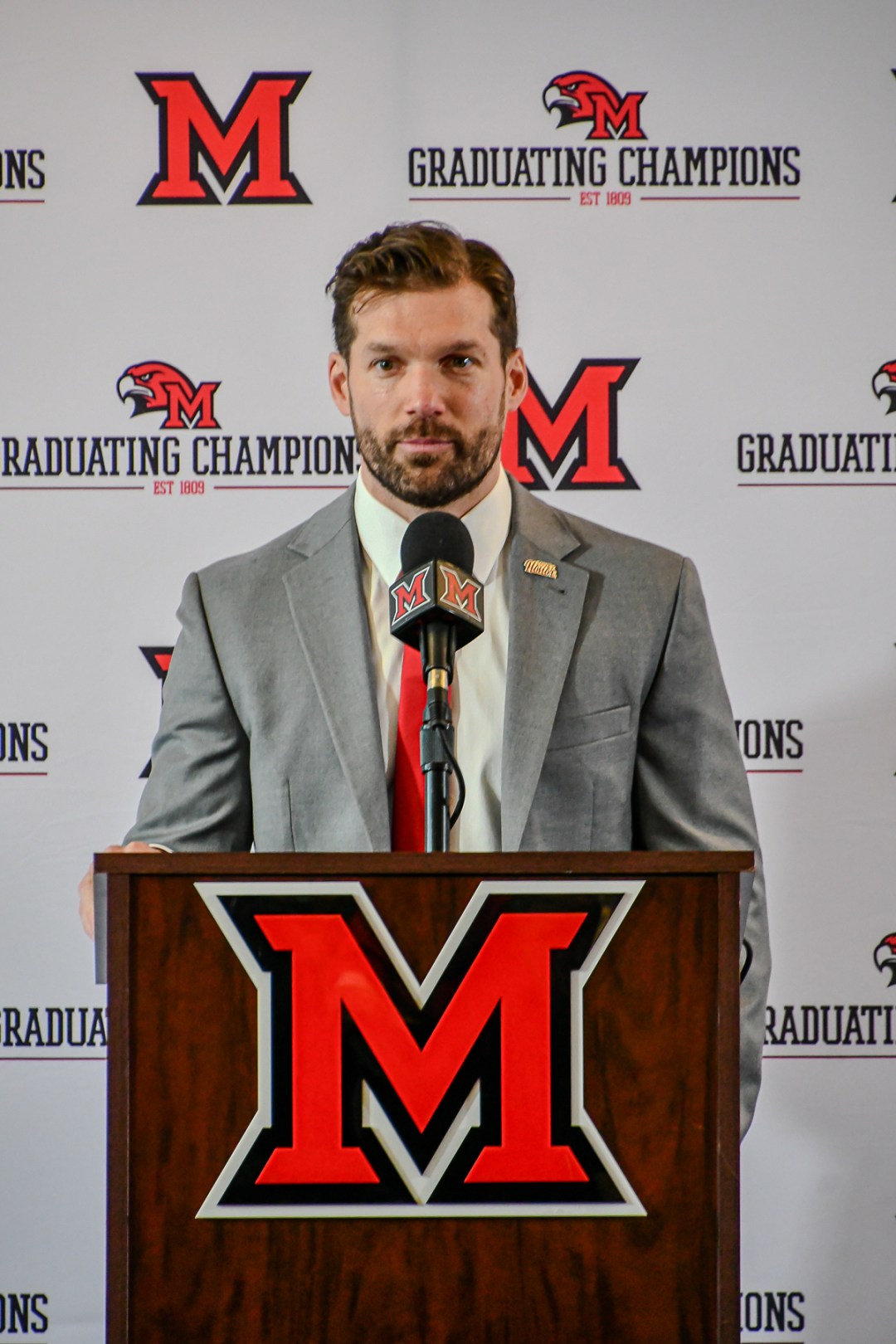
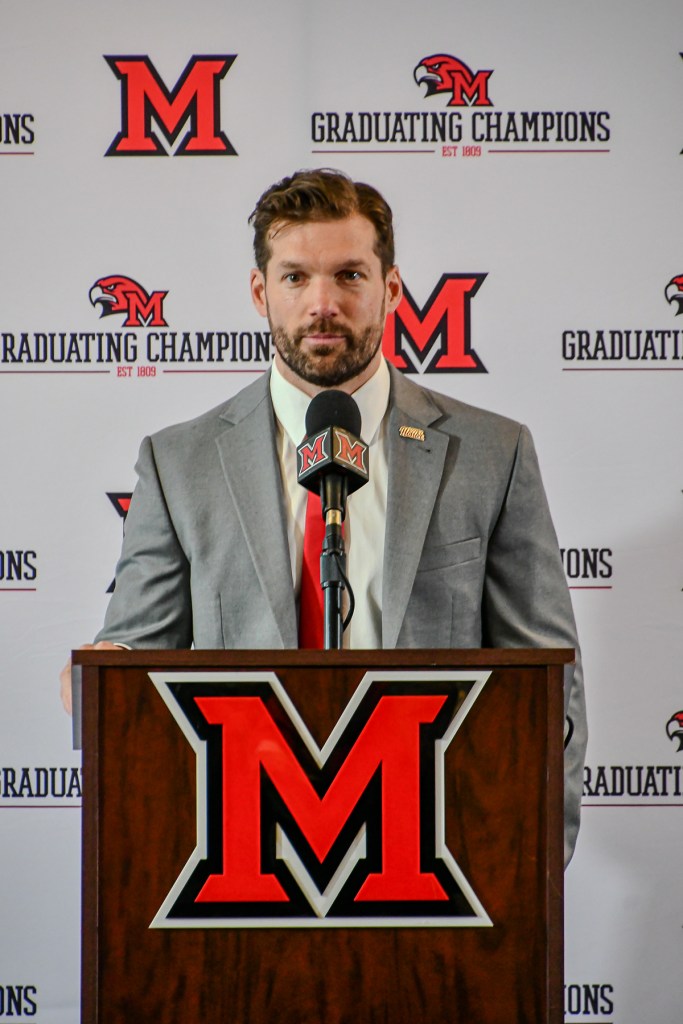
MU added 13 players to its roster — accounting for nearly half of the team — following the hiring of head coach Anthony Noreen, associate head coach Troy Thibodeau and recruiting coordinator and assistant coach David Nies.
The RedHawks were once again picked to finish last in the recently-released NCHC media poll, and with Arizona State beginning conference play this fall, most voters actually think Miami will be the first team in league history to finish ninth.
But there are plenty of reasons to be optimistic that the program is on an upward trajectory, including the caliber of freshmen and transfers joining the team and the pipeline that has already been created through aggressive recruiting.
“What we’ve loved is how the guys have come together, and I think the strength of the group is the group,” Noreen said. “We’ve got a group — they’ve listened, they’ve learned, gotten better, they’ve come together. I think they’ve really bought into the identity of the type of team we want to be.”
VFG takes a look at Miami’s strengths as well as areas in need of improvement for 2024-25:
The boom:
1) A new vision from the top with new energy. Despite their best efforts, the previous coaching staff headed by Miami graduates couldn’t make it work, so the RedHawks went with an outsider this time. Noreen is the first MU coach since 1999 that didn’t play for the team, and he has been extremely vocal about his desire to return the program to pre-2016 levels. His Energizer Bunny-like energy is highly transmissible, and his assistants seemed to have caught it as well. Player morale has been at Charlie Brown levels, and a new face and different messenger may be the key to driving the program forward. Younger coaches can sometimes connect better with the 16-to-20-year-old recruit. Noreen has said and done everything right to this point, now the improvement has to come on the ice.
2) Transfers coming from winning programs. How much do players love these coaches and believe in Miami? Christophe Fillion transferred from Quinnipiac — the team that won the NCAA title in 2023. Colby Ambrosio is coming to Oxford from Boston College, which advanced to the Division I championship game this spring. Both transferred to Miami to play their final collegiate seasons as graduate seniors. A coaching staff can definitely change a locker room, but injecting a team with players that have been national champions or runners-up can provide a confidence enema.

3) Major veteran presence among skaters. With the exception of the four freshmen and sophomore Tanyon Bajzer, every returning forward has played at least two seasons and dressed for a significant number of games. On defense, Rihards Simanovics is the lone sophomore, and both Hampus Rydqvist and Dylan Moulton have played the last four seasons at Miami.
4) More power play weapons. The RedHawks were so bad on the power play last season they should’ve considered declining penalties. Their 13.2 percent efficiency was fifth-worst in Division I, and they allowed four shorthanded tallies. But the additions of Ambrosio and Fillion up front should make an immediate impact, as will Conner Hutchison and Michael Quinn on defense. With Simanovics and Spencer Cox returning — both of whom handled that role well last season — Noreen boasts a multitude of D-men capable of running the point.
“I think that was a major area that we tried to address, through the portal and through some of the new guys,” Noreen said. “I think you’ll see a lot of those portal players playing pretty prominent roles.”
5) Goaltending. Miami’s .880 team save percentage last season was the fifth-worst in all of college hockey. But the RedHawks added USHL Des Moines starter Ethan Dahlmeir, who won 21 games and finished with a .900 save percentage following an outstanding 2022-23 in the NAHL. Sophomore Bruno Bruveris shows tons of promise but was inconsistent last season and was hung out to dry too many times. Having durable goalies is something Miami has struggled with in recent years, but Dahlmeir was second in the USHL in minutes played last season and Bruveris was a starter with Cedar Rapids prior to 2023-24. Goaltending may not be a team strength, as the RedHawks are still very young in net, but they should take a major stride forward in this area.
Areas of concern and in need of improvement…

1) Scoring may again be an issue. Only four NCAA teams scored at a worse rate than Miami’s 2.17 goals-per-game average last season, and the RedHawks’ two top points producers from 2023-24 are in the pros. MU has several solid offensive threats returning like John Waldron and Raimonds Vitolins, plus a couple of transfers coming in that can score, but on paper, Miami still doesn’t match up well up and down its line vs. most teams in its league. Noreen does like his team depth up front heading into the season between the returning players, portal transfers and freshmen.
“We’re probably going to have to be creative and also worked-based in how we create offense,” Noreen said. “We’re going to have to be really strong on special teams, we’re going to need to create second, third, fourth-chance opportunities offensively. I do think we have some guys who are natural goal scorers, overall though I think we’re a team that’s going to score by committee and score a number of ways.”
“I don’t necessarily think we’re going to be a team with one line, or corps with a ton of points, I think we have a bunch of guys, we’re going to be a team that works, and it’s by depth and it’s by committee,” Noreen said.
2) Cutting down shots against — especially high-quality chances — is essential. Opponents averaged 31.2 shots vs. Miami last season, and nearly four per game found the net. This not an indictment solely on the defensemen or the forwards, the whole team needs to tighten up. When things got away from the RedHawks late last season, too often players were caught pinching or out of position, leading to Grade-A chances against in too many cases.
3) Miami needs to win more faceoffs. The RedHawks finished 55th in Division I on draws at 46.6 percent, and too many led to goals against in the defensive zone or easy clears in the O-zone for opponents. Miami has struggled in this area for a while.
4) The team needs to handle adversity better. This isn’t just a 2023-24 thing — for several seasons now Miami will be playing well but a goal against will completely deflate the team and flip the momentum. Often the RedHawks haven’t been able to stop the bleeding, leading to four- and five-goal periods. Closing out games has been a Miami staple since, well, the 2009 NCAA championship game, but it’s become too regular of a theme in recent years. Which leads to…
5) Team confidence must improve. Coach Chris Bergeron said many times last season that getting kicked around the NCHC the past handful of years crippled team confidence. This is where — hopefully — an influx of successful players who have come to Oxford from successful Division I programs could do wonders. Noreen seems to have the personality that can get players past Miami’s recent history of Ottawa Senators expansion season-style losing. The RedHawks enter 2024-25 riding their second-longest winless streak in team history at 16 games (0-15-1) and are one game away from typing MU’s 32-year-old record. It’s been a rough ride for the returning players.
Check back in the coming days as we break the team down by position in Parts II-IV of our season preview series leading up to opening night in Big Rapids on Oct. 4.

 View From the Glass
3 thoughts on “2024-25 Miami preview: Overview”